
As special educators at the secondary level, it is our responsibility to help young adults take the first steps toward real-world independence. There are so many ways we can provide stepping stones towards functional life skills, but guiding students towards an understanding of their own special education services is a great place to start.
Allowing them to participate in their individualized education program, from the actual document to the annual review, is an effective way to build confidence, ownership of learning, and self-advocacy skills. Our students shouldn’t just be attending, but actively participating in their own IEP meetings and progress.
The Individuals with Disabilities Education Act (IDEA) requires that students be invited to their IEP meetings at the age of 14, which is when transition and post-secondary planning begins. While the law sets the minimum expectation, we know as educators that true growth happens when students move beyond attendance and toward participation.
As a special education teacher and transition specialist, I was always astonished by how many new students came to me without knowing they were on an IEP or, if they did, without understanding its purpose.
Many parents understandably shy away from talking to their child about their disability; some may feel their child will feel different, or, if students are dealing with significant learning challenges, may feel their student won’t understand the jargon-filled paperwork.
It is, of course, our role as educators to include students in ways that are appropriate to their unique profiles. The good news? With intentional strategies, we can guide students from passive attendees to confident participants in their own IEP process.
Why Student Participation Matters:
So why does student participation in IEP meetings matter? The answer comes down to one key skill: self-advocacy. At its core, this is the ability to speak up, respectfully and appropriately, about one’s needs (yay communication skills!). This is not a natural skill, but one that needs to be taught, practiced, and given space to grow. Here’s why…
👉 Future Independence: Self-advocacy is a huge part of being an independent adult. Can you speak up when you feel uncomfortable? Can you ask for accommodations in the workplace? Do you advocate for yourself in everyday situations—at the grocery store, the doctor’s office, or anywhere else life takes you? Students might not be in these situations quite yet….but they will be. Let’s prepare them.
👉 Self-Awareness: For students, greater independence (in the classroom and beyond) begins with understanding their own strengths and weaknesses. Students should have an age-appropriate awareness of their disability and its impact on their learning.
As educators, we frequently discuss the importance of active learning. We want students to engage in their education and progress. But that isn’t easy if they don’t understand why it matters. Do they know what they struggle with? What they’re good at? What their goals are? When students see the purpose of learning and feel their input matters, school becomes more than just ‘busy work’—it becomes meaningful.
Involving students in their IEP process gives them a meaningful opportunity to be heard. Self-advocacy takes practice, and an annual review is a safe, supportive environment for students to develop those skills with people who are on their team (literally and figuratively).
If professional environments can be challenging for adults, imagine how much courage it takes for a student to walk into that setting and participate. Even starting small can feel like a big step—one that both challenges them and builds lasting confidence.
How to Involve Students in the Process:
✅ Before the Meeting
- Communicate with parents early. A collaborative approach between parents and educators is essential. There should never be surprises about a student being in a meeting or about what they know regarding their disability.
- Help students develop an age-appropriate understanding of their disability. Be straightforward, but also highlight their strengths.
- Teach students about the IEP process. Review the different parts of the IEP, the timeline, who the related service providers are, and other general education teachers or school personnel who may be at the meeting (and what their roles are).
- Review goals and objectives throughout the year. Provide students with a way to monitor the progress of their IEP goals in a student-friendly and meaningful way. They can also participate in goal setting before the annual IEP meeting.
- Ensure the vision statement is theirs. Once students reach 14, their vision statements should reflect their own goals, not just parent or team priorities. Discuss this with them ahead of time before adding it to the student’s IEP.
- Plan student participation in advance. Sensitive topics may be best discussed without the student present. Decide ahead of time when the student will join the meeting and which portions they’ll stay for—it doesn’t have to be the entire meeting.
- Review what to expect. Walk students through what will happen during their annual meeting. If you use a meeting agenda, this is a great time to review it.
- Review accommodations. Before an annual review, print out their accommodations, have the student go through the list with you, and determine which ones they use consistently and which are less relevant.
✅ During the Meeting
- Speak with the student, not about them. This meeting is about them—don’t make them feel invisible.
- Let them share their vision statement. This is a great opportunity for self-advocacy. If scaffolding or prompting questions help, use them.
- Invite input on accommodations. Talking about accommodations is the perfect time for students to chime in about what works and what doesn’t. If the team agrees, make the necessary changes!
- Look for natural opportunities for students to contribute. If there’s a moment where they can share, make it happen.
- Encourage a portfolio or presentation. Students can bring work samples or create a presentation that reflects their accomplishments or their future vision (this was a favorite with my 18–22-year-old life skills students).
- Highlight transition planning. The Transition Planning section is an excellent opportunity for students to share their goals for the next year, five years, or even ten years. This is also a great time for them to get an understanding of potential transition services.
- Let skilled students lead. For older students who are confident enough, they could even try leading the meeting. They don’t have to manage the entire process, but they could take a more active role in certain parts.
✅ After the Meeting
- Check in with the student. Do they have questions or concerns? Was there anything they weren’t comfortable sharing in the moment?
- Give positive reinforcement. Speaking in front of a roomful of adults is not easy—even for adults. Let them know they did great.
- Continue the conversation. Keep checking in on progress and goals throughout the year. Student participation shouldn’t begin and end with the meeting.

Helping students take an active role in their IEP process is one of the most meaningful ways we can prepare them for independence and success. From setting annual goals to sharing their vision for the future, student involvement gives them ownership of their education and helps build confidence, social skills, and self-advocacy.
With support from their IEP team members and regular check-ins throughout the school year, students can grow into active participants who understand their needs and feel empowered to speak up.
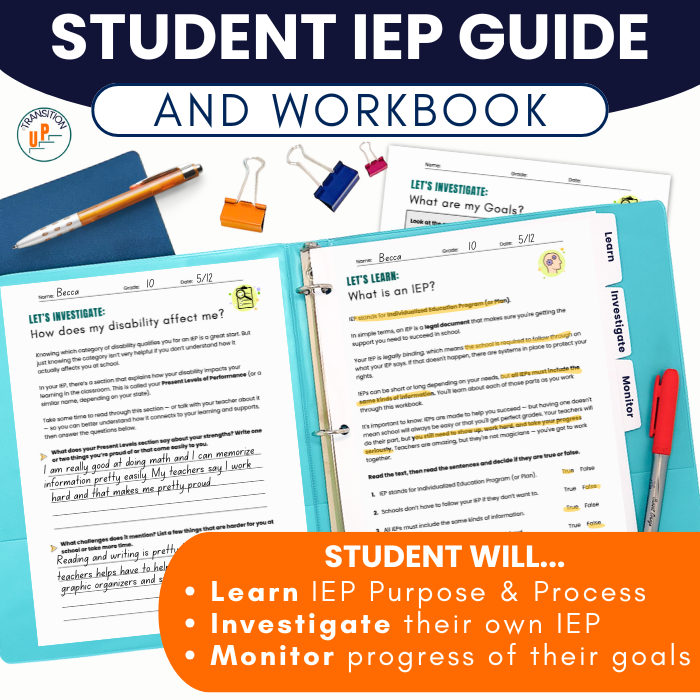
If you’re looking for tools to make this process easier, this Student IEP Guide and Workbook for Teens helps students LEARN the big-picture purpose of an IEP, INVESTIGATE their services and supports, and MONITOR their individual progress throughout the year. Help middle and high school students start the important process of understanding and involvement with their IEPs—and give them the tools they need to become confident, active participants.
🤩 Grab this FREE IEP At-A-Glance for Students to use around annual review time or for check-ins throughout the year!
Want to learn more about self-advocacy? 👉 Check out the blog post Teach Self-Advocacy IEP Goal in 6 Easy Steps
