
Do you teach secondary special education? If you do, I bet you’ve experienced something like this…
You have plans to work 1:1 with a student today. You’re finally going to get some direct instruction in and target-specific IEP goals. Since you’re a time management whiz, you’ve made sure your other students have meaningful independent work that aligns with their individualized education plan (IEP) and supports their educational goals. It’s a win/win, right?
Then reality hits.
The bell rings. You pass out the work. You sit down for that long-awaited 1:1 session and then…
- “Why do I have to do this?”
- “Guess what was for lunch today!”
- “Do I have to do all of this?”
- “Can you help me?”
- “I don’t get it.”
- “I need to go to the bathroom.”
Before you know it, your direct instruction time is gone. You’ve spent the entire period answering questions and putting out fires. The bell rings, and you’re left with half-completed worksheets, no data tracked, and zero progress toward your original goal.
Sound familiar? Yeah—been there.
The Problem
I knew something had to change. I needed:
- A daily routine around independent work that felt familiar and consistent
- A way to increase student independence and reduce the need for additional support
- A system that encouraged students to understand their IEP goals and academic progress
- A manageable way to collect data for the IEP team and special education professionals in my school district
That’s when I created The Independent Binder System—and honestly? It changed my classroom (and saved my sanity).
Here’s How:
If you’d rather skip the reading and watch a quick video tutorial on how it works, 👉 CLICK HERE.
Step 1: Set Up the Binder
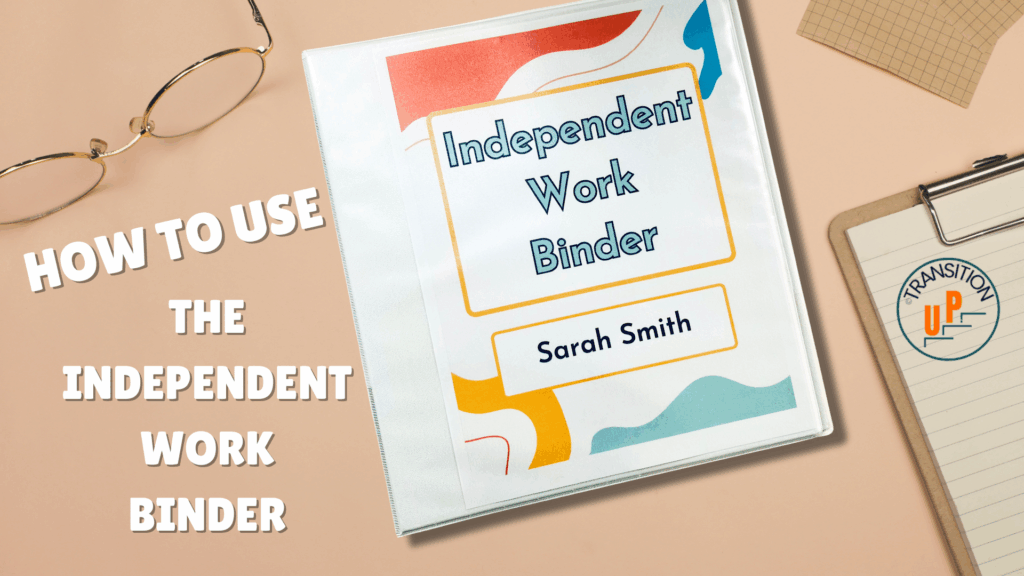
Grab a 1-inch binder for each student.
You can download the editable Canva template I use HERE (it’ll be sent straight to your inbox).
Binder Cover:
Edit the cover page to match your students’ personalities—or don’t, if you’re tired. (No judgment here.)
A personalized binder helps students develop organization, life skills, and a sense of ownership—all essential for independent living later on.
Step 2: Create the Independent Work Page
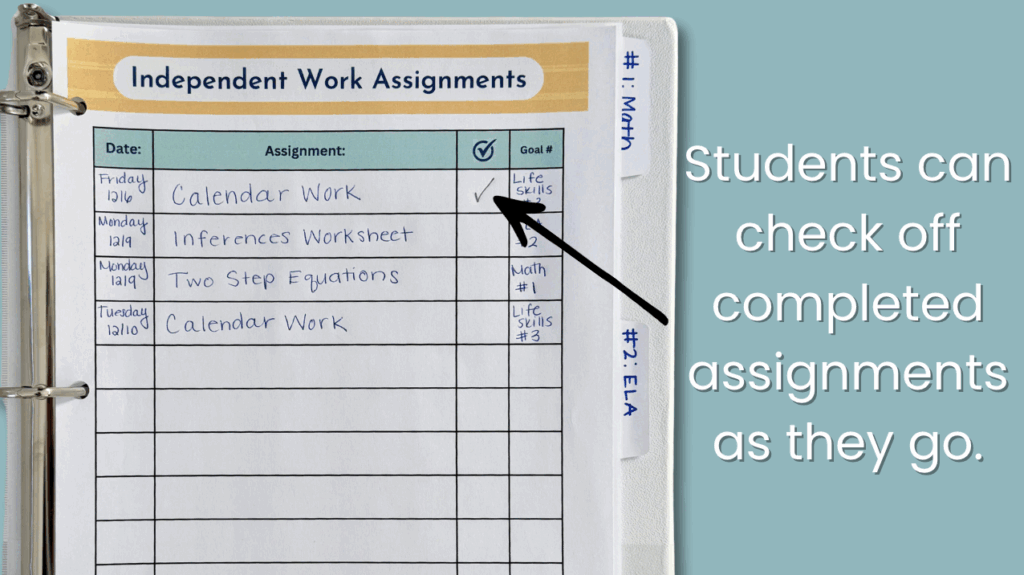
Print a blank Independent Work Binder Page from the template.
Here’s how to use it:
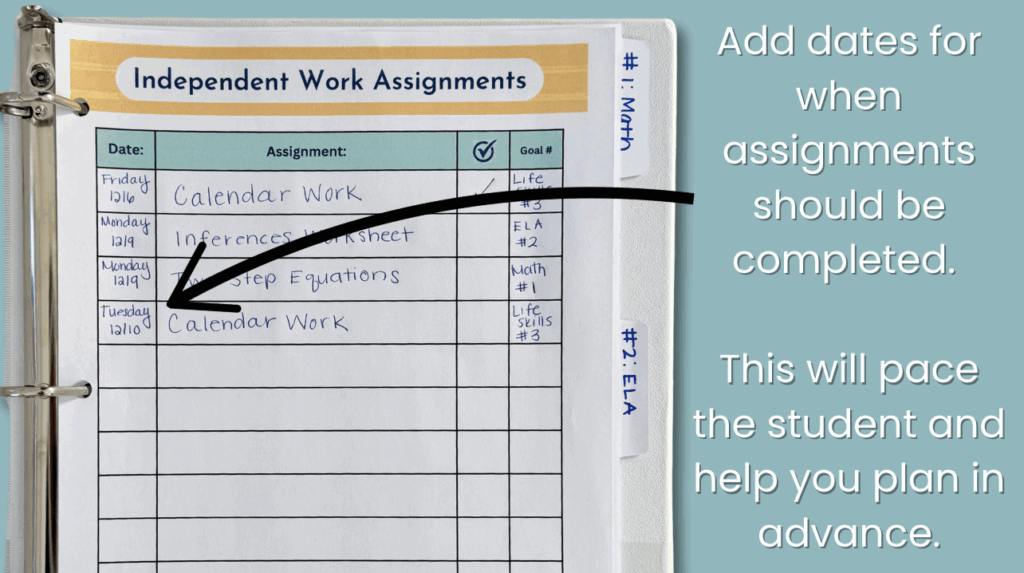
- List each student’s assignments and the date they should complete them.
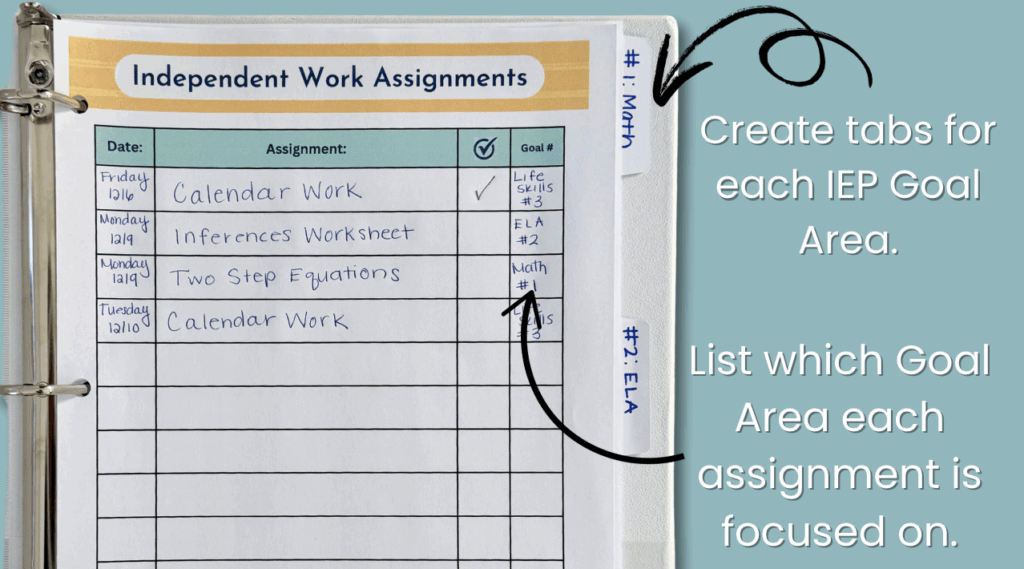
- In the right-hand column, list the IEP goal number that the assignment targets.
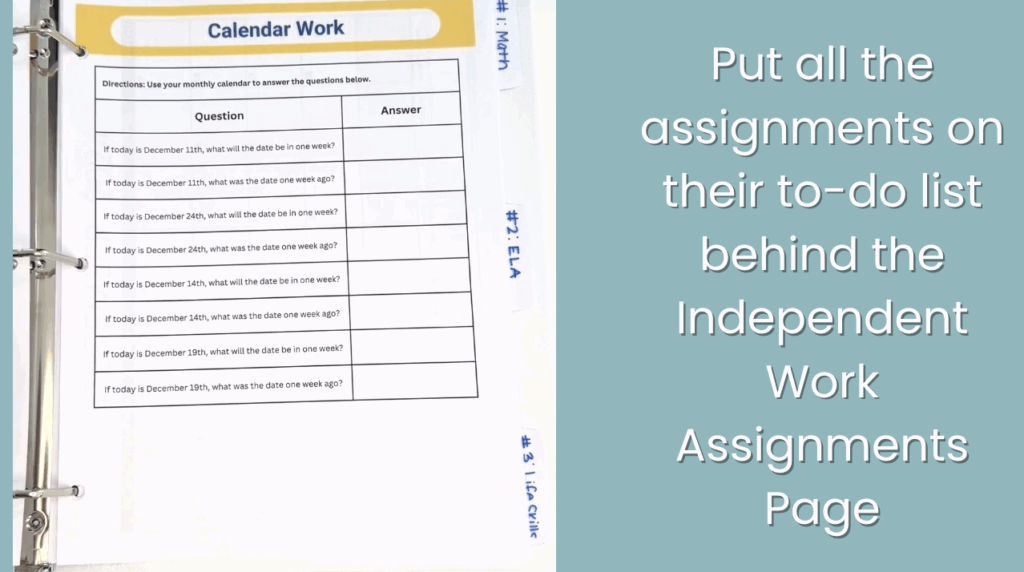
- Place the actual work behind this page.
- Make sure it’s work students can complete independently within their special education program.
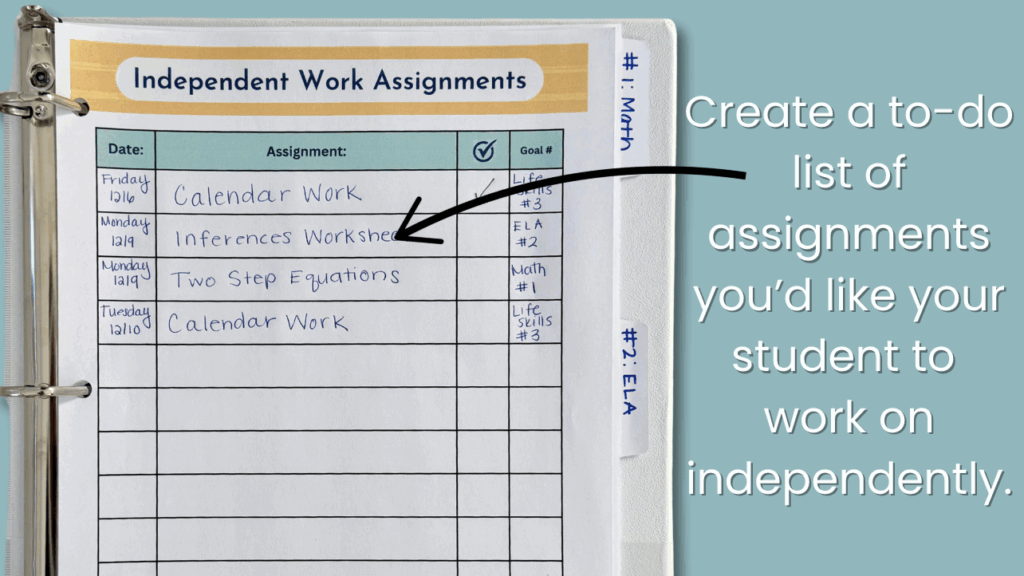
Prep work for a day, a week, or even a month—whatever helps you manage your time effectively and keeps the daily routine smooth for both you and your school team.
⭐️ Teacher Win: Because each assignment has a completion date, students always know what to do that day. When they’re finished, they check it off. No confusion, no questions—just student independence in action.
When students enter the classroom, they grab their binder, open it, and get right to work. This fosters problem-solving skills, social interactions, and independent skills that go beyond academics.
😎 Insider Tip– start putting “Independent Work” into student schedules. Once I started doing this, kids would walk in and I’d say “check your schedules”. Voilà – they’d see Independent Work listed and off they’d go.
Step 3: Add Goal Pages
Next, create tabs in the binder for each IEP goal area (like Math, Writing, or Life Skills). When adding an independent work assignment, list the corresponding goal. This helps students understand the purpose behind their work!
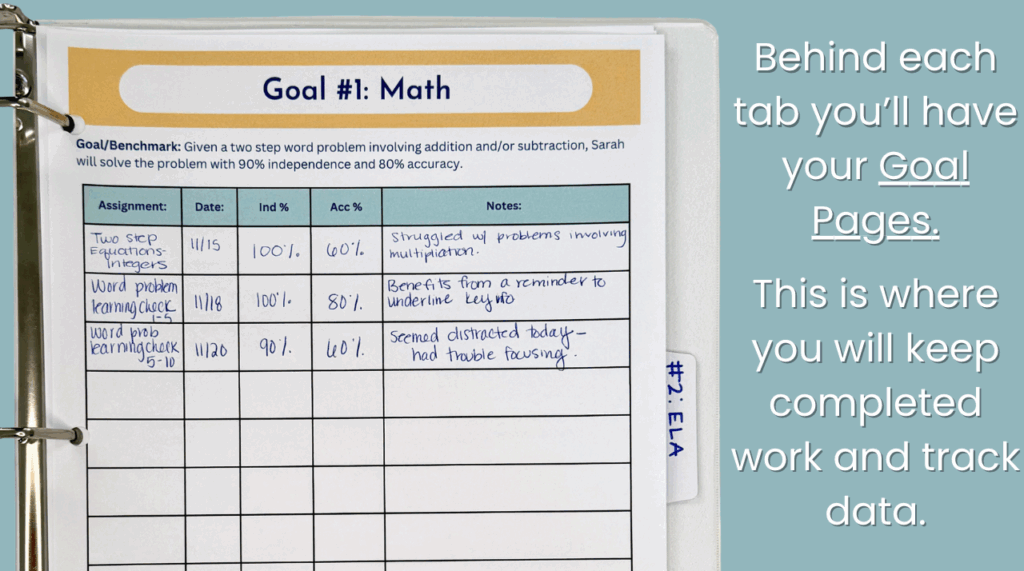
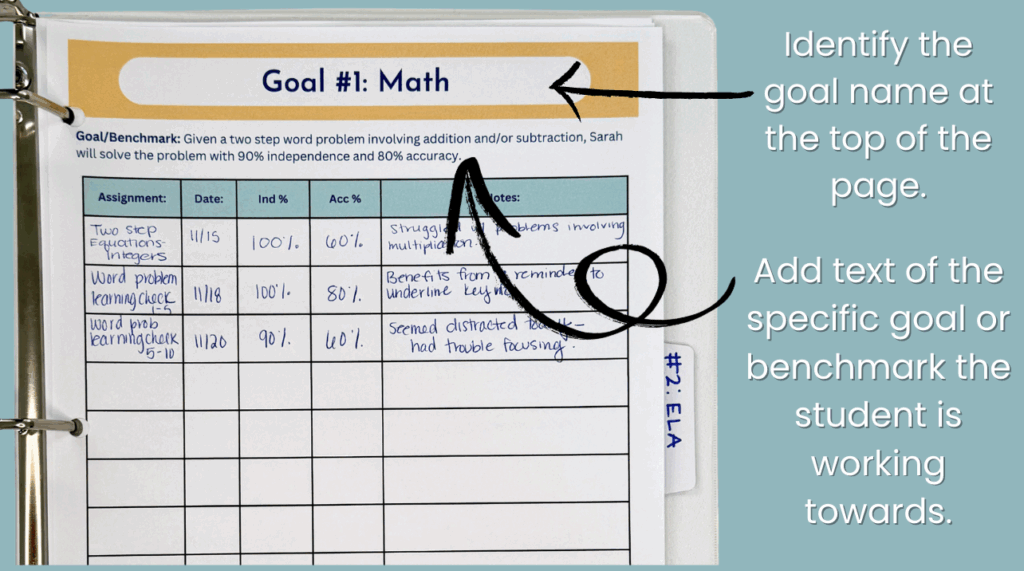
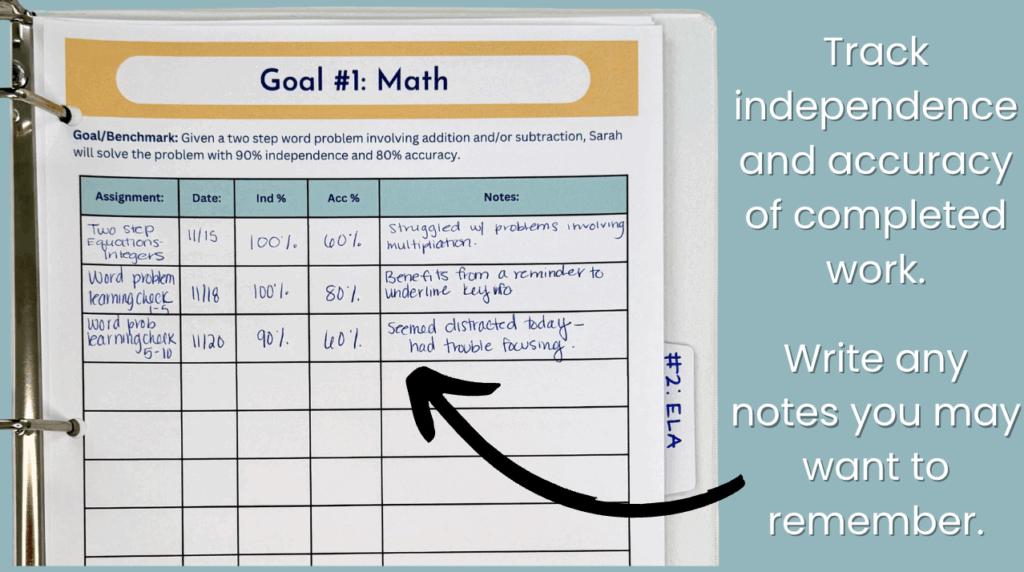
Behind each tab, insert a Goal Page that includes:
- The name of the IEP goal
- The written goal itself (make it student-friendly, if needed)
Once there is some completed independent work (and you have time), review the student’s work and assess accuracy and independence. (For independent work, I aim for 100% independence—that’s the point!)
Then:
- Record the data on the Goal Page
- Note which assignment it corresponds to
- File the completed work behind that goal page
Now you’ve got:
📂 A portfolio of completed work
📊 Data ready for IEP meetings or discussions with the IEP team
This structure supports the least restrictive environment, helps with progress monitoring, and provides evidence for special education services reviews.
Final Thoughts
This system gave my students structure, ownership, and confidence—and it gave me time back in my day. No more scrambling for data, answering endless questions, or losing track of who did what.
The Independent Binder System has been one of the most practical, special education independence routines I’ve ever implemented. It supports middle school and high school students in developing essential life skills, promoting independent study, and connecting classroom learning to their individual needs.
It’s the perfect proactive approach for special education teachers who want to blend structure, independence, and meaningful data collection—all while maintaining a calm, organized classroom.
😎 Click HERE to get the Canva Template and put it to use today!
🤩 THIS VIDEO TUTORIAL will show you how to implement it.
